Winter in Bangladesh: Beautiful and Brutal
For the millions of Bangladeshis with a roof over their heads, winter is the loveliest time of year. The fog rolls in at dawn, Pithe festivals fill neighbourhoods with the smell of rice cakes, and the sunlight has a rare, golden softness. But for those who have no roof — no walls, no blanket, no door to close — Bangladesh’s winter months between November and February are a season of suffering.
According to the Population and Housing Census 2022, there are at least 22,185 officially homeless people in Bangladesh, though researchers and NGOs widely regard this as a significant undercount. Historical estimates have placed the figure considerably higher: 4.6 million in 2010 and projected at 8.5 million by 2021, driven by poverty, riverbank erosion, cyclones, and relentless rural-to-urban migration. Even at conservative figures, the scale of homelessness in a country of 170 million is enormous. In Dhaka alone, thousands sleep on pavements at Sadarghat, Bahadur Shah Park, and along Old Dhaka’s streets — with children among them.
Reports from the Dhaka Tribune and other media describe homeless people wrapping themselves in rags, burning leaves for warmth, and — in one haunting image that spread widely — a teenage boy and a stray dog sharing a single blanket. The cold is democratic in its cruelty; it does not care whether you lost your home to a cyclone, to poverty, or to a landlord’s eviction notice.
IGMIS Foundation Answers the Season
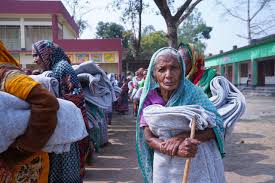
Every year, as winter tightens its grip on Bangladesh’s streets, the IGMIS Foundation organises a warm clothing distribution drive for homeless people — those who battle the cold not from the comfort of a blanket-layered bedroom but from a patch of pavement or a corner under a bridge.
The initiative is deliberately quiet in its scale and loud in its symbolism. It does not solve homelessness. It does not eliminate poverty. What it does is look the people on the margins of Bangladesh’s cities in the eye and say: you are seen. A warm coat in January is more than fabric. It is dignity in a very practical form.
The Culture of Giving That the Foundation Embodies
The IGMIS Foundation’s winter drive reflects a broader culture of civic responsibility that chairman S.M. Zakir Hossain has built into the organisation’s identity. From flood relief to education scholarships, the Foundation’s multiple initiatives share a common thread: identifying the people whom formal institutions and government programmes have not yet reached, and reaching them anyway.
In a country that Prothom Alo once described as having five million homeless, where three-quarters of the population live in mud houses, and where a child can be born into a life on the streets and age within it, private civil society organisations that maintain a consistent culture of compassion are not supplementary — they are essential.